Single-Use Pinch Valves Hero
Single-Use Pinch Valves

Single-Use Pinch Valves for Bioprocessing

Sterile flow control without a wetted valve. Manual, pneumatic and motorized pinch valves for single-use bioprocess lines, ¼″ to 1″ tubing OD.

Engineered for GMP single-use flow paths, our pinch valves pair a reusable 316L stainless steel mechanism with disposable tubing, cutting consumable cost against fully disposable alternatives without compromising sterility. Clamp-on installation drops straight into existing skids alongside our flow path assemblies, PIXER pumps and single-use bags. Choose manual, pneumatic or motorized actuation from one qualified platform and standardize your specification across the process.
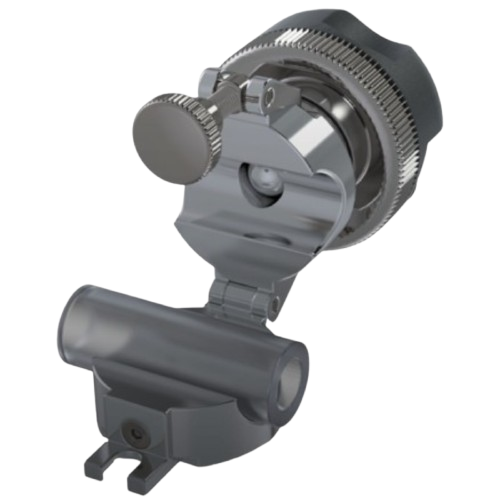
Open single-use pinch valve showing the internal pinch mechanism
📏
Tubing OD Range¼″ – 1″
🧪
TubingGamma Sterilizable
Actuation OptionsManual, Pneumatic, Motorized
💧
Pressure RatingUp to 6 bar
The Principle

How a Single-Use Pinch Valve Works

A pinch valve has no internal wetted parts. An actuator drives a stem against the outside of flexible tubing. The tubing collapses, flow stops. Release the stem and the tubing recovers its shape.

Because the tubing is the only product-contact surface, the entire wetted path is disposable. There is no seat to erode, no crevice to trap product, and no cleaning cycle to validate.

Our valve body carries internal stem guides. These keep the stem square to the tubing through every cycle. Alignment stays consistent, so closing force stays consistent. That is what makes closure repeatable over thousands of cycles rather than drifting as the tubing takes a set.

Choose Your Actuation

One pinch head. Three ways to drive it.

Every variant shares the same 316L mechanism and the same tubing compatibility. Pick the actuation that matches your process and your available utilities.
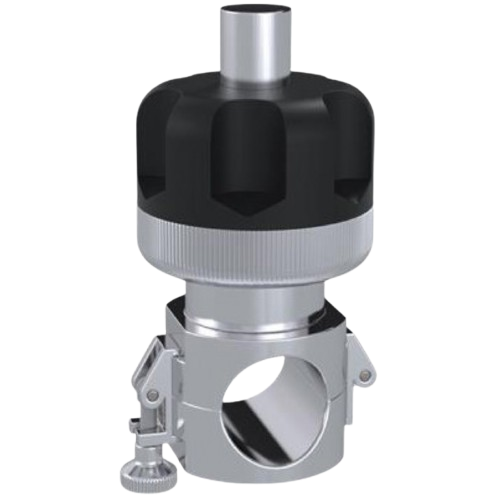
ARTeVA manual pinch valve with 316L stainless steel pinch head and handwheel actuation

Manual

Hand-tightening adjustment. No power, no air. Tool-free clamp-on install with a visible open/closed indicator.
Best for: lab-scale development, benchtop setups, mobile carts, small-scale sterile operations.
Single-use manual pinch valve
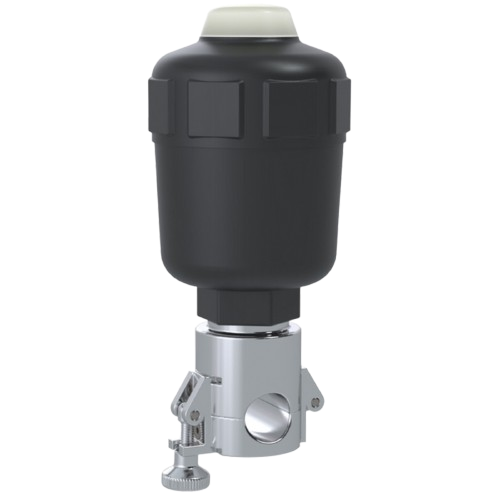
ARTeVA pneumatic pinch valve for single-use bioprocess tubing, air-actuated

Pneumatic

Air-actuated for fast, uniform closure across thousands of cycles. Runs on standard plant air with no new electrical infrastructure. Built for high-cycle duty.
Best for: high-throughput production lines with existing pneumatic infrastructure.
Single-use pneumatic pinch valve
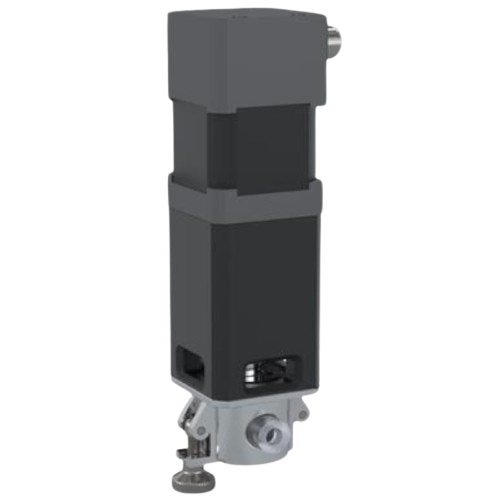
ARTeVA motorized pinch valve with 24V DC stepper drive and M12 connector

Motorized

24 V DC stepper drive with 700+ steps of positioning and optional encoder feedback. M12 connectors for PLC and SCADA integration.

Best for: automated skids, perfusion, filtration control, media and buffer transfer.
Single-use motorized pinch valve

At a glance

ManualPneumaticMotorized
ActuationHandwheelCompressed air24 V DC stepper
Utilities requiredNonePlant air24 V DC
Pressure ratingUp to 4 barUp to 4 barUp to 6 bar
Positional controlManual setOpen / closedProgrammable, 704 steps
FeedbackVisual indicatorVisual indicatorVisual + optional encoder
AutomationNoneExternal air controlM12, PLC / SCADA ready
Typical useLab, benchtop, cartsHigh-cycle productionAutomated skids, perfusion
Tubing OD¼″ – 1″¼″ – 1″¼″ – 1″

Why single-use teams choose pinch valves

No wetted components

The flow path is your tubing and nothing else.

No cleaning validation

Change the tubing, not the valve.

Low shear

Flow is throttled by geometry, not forced past a seat.

Bidirectional

No flow-direction constraint.

👁

Visible state

Operators see open or closed without instrumentation.

Drop-in

The clamp-on body fits existing skids without redesign.

Specifications

Specifications at a Glance

SpecificationDetail
Tubing OD range¼ in. (6.4 mm) – 1 in. (25.4 mm)
Tubing compatibilitySilicone, TPE, braided, reinforced. No proprietary tubing
Pinch head material316L stainless steel, body and connections
Connection typeClamp-on, pinches directly on tube. Tool-free installation
Pressure ratingUp to 4 bar (manual, pneumatic); up to 6 bar (motorized)
Process temperatureDetermined by the selected tubing material
SterilisationGamma sterilizable tubing; autoclavable 316L pinch head
Position indicationVisible open/closed indicator on all variants
DocumentationMaterial of Construction (MOC) certification available

Motorized: Electrical & Environmental

ControlBipolar stepper with encoder
Supply voltage24 V DC
Electrical connectorM12 5-pin (non-encoder) · M12 8-pin (encoder)
Stroke resolution704 steps, microsteppable
Stroke travel time2 mm/s max
Ingress protectionIP 65
Ambient temperature−10 °C to 50 °C (14 °F to 122 °F)
Mass680 g – 3.6 kg (1.5 lb – 7.9 lb)
Applications

Applications in Bioprocessing

Our pinch valves are used across upstream and downstream processing, anywhere a hygienic shut-off or throttle is needed on single-use tubing.

Upstream

Media and buffer transfer, cell culture feed lines, perfusion circuits, bioreactor inlet and outlet control. The reusable mechanism handles repeated cycling with consistent compression. For automated, PLC-commanded sequencing on these lines, see our motorized pinch valve.

Downstream

Filtration and chromatography, harvest and collection paths, viral inactivation hold steps. Single-use tubing eliminates carryover between batches. Pinch valves are the standard flow-control element in our single-use TFF system, often specified with the pneumatic pinch valve for high-cycle automated lines.

Fill-finish & aseptic transfer

Sterile transfer, final fill workflows and closed-system operations where the flow path must stay disposable end to end.

Process diversion & sampling

Sampling points, bypass operations and diversion paths that need quick, reliable switching without disturbing the main product stream.

Lab & benchtop scale

Process development, screening and small-scale sterile operations. The manual pinch valve needs no infrastructure, just clamp on, connect tubing, operate.

Complete single-use fluid paths

Specified alongside flow path assemblies, custom single-use bags and PIXER pumps so the whole path comes from one supplier.

Industries

Monoclonal antibodiesCell therapyGene therapyViral vectors (AAV, lentivirus)mRNAVaccinesRecombinant proteinsExosomes & LNPsMonoclonal antibodiesCell therapyGene therapyViral vectors (AAV, lentivirus)mRNAVaccinesRecombinant proteinsExosomes & LNPs
Selection

Pinch Valve vs Diaphragm Valve

Two ways to control flow in a single-use line. They are not interchangeable.

Single-use pinch valveSingle-use diaphragm valve
Wetted componentsNone, tubing onlyDiaphragm and body
Primary functionShut-off and throttlingShut-off and precise pressure control
Cleaning validationNoneNone (disposable)
Shear on productLowLow
Flow-path change costTubing onlyWetted body replacedActuator is reusable
Best suited toLine shut-off, diversion, throttlingTMP control, proportional pressure

If your process needs proportional pressure control rather than simple shut-off, our single-use diaphragm valves are the better fit, and many processes specify both.

Downloads & Documentation

Request the Datasheet Pack

One short form. Everything you need to specify a single-use pinch valve for your process.

  • Manual pinch valve datasheet
  • Pneumatic pinch valve datasheet
  • Motorized pinch valve datasheet

Request the Datasheets

Tell us your tubing size and application and we will include the right configuration guidance.

Thank you! Your submission has been received!
Oops! Something went wrong while submitting the form.
FAQ

Frequently Asked Questions

What is a single-use pinch valve?

A single-use pinch valve controls flow by compressing the outside of flexible tubing. The valve mechanism never contacts the process fluid. All product-contact surfaces are on the disposable tubing, which keeps the flow path sterile and removes cleaning validation.

How does a pinch valve work?

An actuator drives a stem against the outside of the tubing until it collapses and flow stops. Releasing the stem lets the tubing recover. Internal stem guides keep the stem aligned so closing force stays consistent across cycles.

What tubing sizes do your pinch valves support?

Tubing outer diameters from ¼ in. (6.4 mm) to 1 in. (25.4 mm), across silicone, TPE, braided and reinforced formats. No proprietary tubing is required.

What pressure ratings are supported?

Up to 4 bar for manual and pneumatic variants, and up to 6 bar for the motorized variant.

Are your pinch valves gamma sterilizable?

Yes. The single-use tubing is gamma sterilizable and compatible with GMP single-use systems. The 316L stainless steel pinch head is reusable and autoclavable.

What operating temperature can the valve handle?

Process temperature is set by the tubing you select, not by the valve. Tell us your tubing material and we will confirm the range for your application.

Which actuation option should I choose?

Manual suits lab, benchtop and mobile applications with no utilities available. Pneumatic suits high-cycle production lines that already have plant air. Motorized suits automated skids that need programmable positioning and feedback.

Will these valves require a skid redesign?

No. The clamp-on design and universal tubing fit give drop-in compatibility with existing setups.

How do the valves integrate with automation?

The motorized variant provides 24 V DC operation, M12 connectors and optional encoder feedback for PLC, SCADA and Pharma 4.0 integration.

What is the difference between a pinch valve and a single-use diaphragm valve?

A pinch valve has no wetted components, it squeezes your tubing from outside. A single-use diaphragm valve has a disposable wetted body and diaphragm, and gives finer proportional pressure control. Pinch valves suit shut-off, diversion and throttling. Diaphragm valves suit precise pressure control.

Is the pinch mechanism reusable?

Yes. The 316L stainless steel pinch head is designed for repeated use, cleaning and autoclaving. Only the tubing is replaced between batches, which keeps consumable cost far below a fully disposable valve.

Specify the Right Pinch Valve for Your Process

Tell us your tubing size, cycle frequency and actuation preference. Our engineering team will confirm the right variant and configuration.