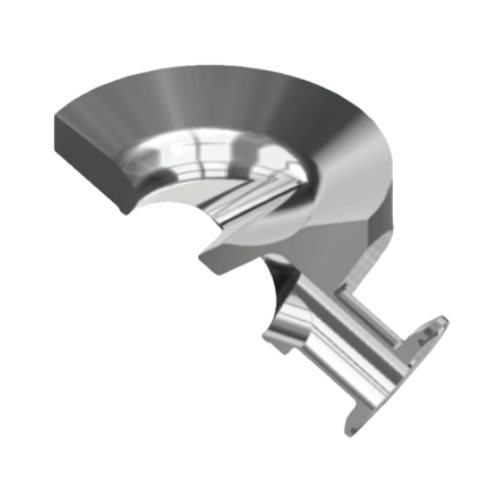
Aquasyn stainless¼ to 4 in.Welded flange or Tri-Tank

Sanitary Tank Bottom Valves for Bioprocess Vessels

Diaphragm valves that seal at the vessel floor, so the tank drains through the valve and nothing is left standing at the bottom.

Aquasyn tank bottom valves are machined from 316L bar stock, with Hastelloy and AL-6XN options, in two body styles from ¼ to 4 in. Choose manual, pneumatic or electric actuation. Tell us about your vessel and we reply with a quotation and a GA drawing.

Aquasyn sanitary tank bottom valve in stainless steel with an actuator and a tri-clamp outlet30°outlet angle316Lbar stock, no castings¼ to 4 in.valve sizes
Body stylesWelded flange or Tri-Tank
Sizes¼ to 4 in.
Body materials316L, Hastelloy, AL-6XN
ActuationManual, Pneumatic, Electric
How it works

How tank bottom valves drain a vessel

A tank bottom valve puts the seal where the liquid ends: at the floor of the vessel. Nothing waits in a pipe stub below the tank, so the vessel empties through the valve.

Definition

A tank bottom valve is a diaphragm valve built into the lowest point of a tank, vessel or mixer. The diaphragm closes against a weir that sits close to the vessel flange. When the valve opens, the chamber between the weir and the flange is open to the tank, so product, buffer or rinse drains out through the outlet.

Cutaway of a tank bottom valve body showing the weir close to the vessel flange and the angled outlet

Machined from bar stock, not cast. The weir face sits close to the flange, so there is no stagnant zone between the vessel floor and the seal.

Closed: sealed at the vessel floor
Cross-section of a tank bottom valve welded into the bottom head of a vessel, with a pneumatic actuator below it. Closed, the diaphragm seals on the weir just below the vessel floor. Open, the actuator pulls the diaphragm back and the vessel drains through the 30 degree outlet.Flange weldedinto the headSeal just belowthe vessel floorWeirDiaphragm:PTFE on EPDMCompressorPneumaticactuatorAir in opens itOutlet at 30°12345678
  1. 1Flange welded into the head
  2. 2Seal just below the vessel floor
  3. 3Weir
  4. 4Diaphragm: PTFE on EPDM
  5. 5Compressor
  6. 6Pneumatic actuator
  7. 7Air in opens it
  8. 8Outlet at 30°

Section through a welded flange body with a pneumatic actuator. Simplified, not to scale.

  1. 1

    Fit it at the low point

    Weld the flange into the vessel floor, or clamp a Tri-Tank body to a tri-clamp port. Set the outlet pointing downhill to the drain line.

  2. 2

    Closed: sealed at the floor

    The diaphragm presses onto the weir right below the vessel floor, so the batch holds in the tank.

  3. 3

    Open: the vessel drains

    The diaphragm lifts off the weir and the tank empties through the chamber and out of the 30° outlet.

  4. 4

    Drain, sample or clean

    Use it for harvest and transfer, for sampling from the vessel, and for draining at cleaning turnover.

Body styles

Welded flange or Tri-Tank: two tank bottom valve body styles

Both styles drain at a 30° outlet angle and come in sizes from ¼ to 4 in. The difference is how the body joins the vessel.

Welded flange

The standard choice
Welded flange tank bottom valve welded into the vessel floor, with a pneumatic actuator and a 30 degree outletWelded into thevessel floor
  • Welded into the vessel floor, with the shortest stack below the tank
  • Sizes from ¼ to 4 in.; other sizes on request
  • Machined from bar stock in 316L, Hastelloy or AL-6XN
  • The weir face sits close to the weld flange and the chamber is open to the tank, so nothing stagnates at the bottom

Tri-Tank

Clamps on, comes off
Tri-Tank tank bottom valve clamped to a tri-clamp port on the vessel, with a pneumatic actuator and a 30 degree outletTri-clamp to thevessel port
  • Clamps to a tri-clamp port, so it comes off without breaking a weld
  • Suits vessels that are stripped and cleaned often, and sampling from the vessel
  • Sizes from ¼ to 4 in. with a range of tri-clamp connections
  • Other connection types can be made as a custom body

Which vessel port does a Tri-Tank need?

The Tri-Tank body clamps to the vessel, so the port size is set by the valve size. Larger bodies are matched to your vessel connection when we quote.

¼, ⅜ and ½ in. valves1.5 in. TC and up
¾ in. valves2 in. TC and up
1 to 4 in. valvesMatched to your port
Spec builder

Build your tank bottom valve spec

Pick the options below. The drawing and the spec line update as you go, and one button carries the spec into your quote request.

Body style
Valve size (in.)
Body material
Surface finish (Ra)
Electropolished
Diaphragm
Outlet connection
Actuation
Your tank bottom valve

½ in. welded flange tank bottom valve

Check the spacebelow the vessel

    Added to your request below.

    Specifications

    Tank bottom diaphragm valve specifications

    Standard options for Aquasyn sanitary tank bottom diaphragm valves. Other sizes, materials and connections can be quoted as a custom body.

    Body stylesWelded flange (welds into the vessel floor) or Tri-Tank (tri-clamp to the vessel)
    Valve sizes¼ to 4 in.; other sizes on request
    Tri-Tank vessel connection¼ to ½ in. valves: 1.5 in. TC and up. ¾ in. valves: 2 in. TC and up. Larger valves matched to your vessel when quoted
    Outlet angle30° on both body styles
    Body materials316L stainless steel, Hastelloy or AL-6XN, machined from bar stock (no castings)
    TraceabilityEN 10204 3.1 material test reports with heat numbers as standard
    Surface finish5, 10, 15, 20 or 25 Ra, mechanical or electropolished
    DiaphragmsEPDM, PTFE-faced (TFM 1700) EPDM, silicone or Viton. Diaphragms conform to USP Class VI, ASME-BPE and FDA 21 CFR 177.2600
    Diaphragm temperature (continuous)EPDM −51 to 141 °C (−60 to 285 °F); PTFE-faced EPDM −18 to 149 °C (0 to 300 °F); silicone −59 to 204 °C (−75 to 400 °F); Viton −18 to 204 °C (0 to 400 °F)
    Outlet connectionsHygienic clamp, butt weld or orbital weld; special connections on request
    ActuationManual bonnet, Pneumatic actuator (normally closed or normally open) or Electric actuator (4-20 mA, 0-10 V or on/off signal)
    Pressure ratingUp to 10 bar (145 psi) at 20 °C, depending on body size
    Applications

    Where tank bottom valves are used

    Tank bottom valve systems are used anywhere a vessel has to empty fully: at harvest and transfer, at sampling and at cleaning turnover.

    Bioreactors and fermenters

    Drain at harvest and between batches.

    Media, buffer and product hold tanks

    Empty the tank completely to the next step.

    WFI and purified water storage

    A sanitary drain point at the tank floor.

    CIP supply and return tanks

    Drain cleaning solutions out of the vessel.

    Mixing and formulation vessels

    Discharge the full batch from the vessel.

    Since 1996Aquasyn high-purity diaphragm valves
    Bar stock, no castingsBodies machined from solid bar
    EN 10204 3.1MTRs with heat numbers as standard
    USP Class VIDiaphragms, plus ASME-BPE and FDA 21 CFR 177.2600
    FAQ

    Tank bottom valve FAQ

    Answers to common questions about sanitary tank bottom valves.

    What is a tank bottom valve?

    A tank bottom valve is a diaphragm valve built into the lowest point of a tank, vessel or mixer. The diaphragm seals on a weir close to the vessel flange, so when the valve opens the vessel drains through it and nothing is left standing at the bottom.

    What types of tank bottom valve are there?

    Tank bottom valves are made as ball valves, as disc or rising-stem valves that lift into the tank, and as diaphragm valves. For sanitary and bioprocess vessels a diaphragm valve is the usual choice, because the diaphragm keeps the stem and actuator out of the product. Aquasyn tank bottom valves are diaphragm valves in two body styles: welded flange and Tri-Tank.

    How does a tank bottom diaphragm valve drain a vessel fully?

    The weir face sits close to the flange and the chamber between the weir and the flange is open to the tank. With the seal at the vessel floor instead of down a pipe stub, product, buffer or rinse drains out through the 30° outlet and nothing stagnates at the bottom of the vessel.

    What is the difference between a welded flange and a Tri-Tank tank bottom valve?

    A welded flange body is welded into the vessel floor and gives the shortest stack below the tank. A Tri-Tank body clamps to a tri-clamp port on the vessel, so it comes off without breaking a weld. Tri-Tank suits vessels that are stripped and cleaned often, and sampling from the vessel.

    Who manufactures these tank bottom valves?

    Aquasyn is the manufacturer. It has engineered high-purity diaphragm valves in America since 1996. We supply Aquasyn tank bottom valves and replacement diaphragms, and quote each valve with a GA drawing.

    What sizes do tank bottom valves come in?

    Both body styles come in sizes from ¼ to 4 in. Other sizes and connection combinations are available on request.

    Which vessel connection does a Tri-Tank valve need?

    ¼ to ½ in. Tri-Tank valves take a 1.5 in. tri-clamp port or larger, and ¾ in. valves take a 2 in. port or larger. Larger valves are matched to your vessel connection when we quote.

    What materials and surface finishes are available?

    Bodies are machined from 316L stainless steel bar stock, with Hastelloy and AL-6XN as options. Surface finishes run from 5 to 25 Ra, mechanical or electropolished, and EN 10204 3.1 material test reports with heat numbers come as standard.

    Which diaphragm materials can I choose?

    EPDM, PTFE-faced (TFM 1700) EPDM, silicone or Viton. The diaphragms conform to USP Class VI, ASME-BPE and FDA 21 CFR 177.2600.

    Can I get replacement diaphragms for a tank bottom valve?

    Yes. The diaphragm is the wear part and is replaced at maintenance. We supply Aquasyn replacement diaphragms in EPDM, PTFE-faced EPDM, silicone and Viton. Tell us the valve size and diaphragm material with your order.

    Can tank bottom valves be automated?

    Yes. Choose a Manual bonnet, a Pneumatic actuator (normally closed or normally open) or an Electric actuator that takes a 4-20 mA, 0-10 V or on/off signal. Check the space below the vessel for the actuator you choose.

    What pressure is a sanitary tank bottom valve rated for?

    Up to 10 bar (145 psi) at 20 °C, depending on body size. Tell us your working pressure and temperature and we confirm the right body with the quotation.

    Can I take samples through a tank bottom valve?

    Yes. The Tri-Tank style suits sampling from the vessel because it clamps on and comes off without breaking a weld. For dedicated sample points, see our sample and bleed valves.

    Do you also supply the line from the tank outlet?

    Yes. Our team also supplies single-use flow path assemblies and PIXER single-use pumps, so the transfer line from the tank outlet can be quoted with the valve.

    What do you need from me for a quote?

    The body style, valve size, vessel connection, body material, surface finish, diaphragm, outlet connection, actuation and quantity. Use the spec builder on this page to send it in one go. We reply with a quotation and a GA drawing.

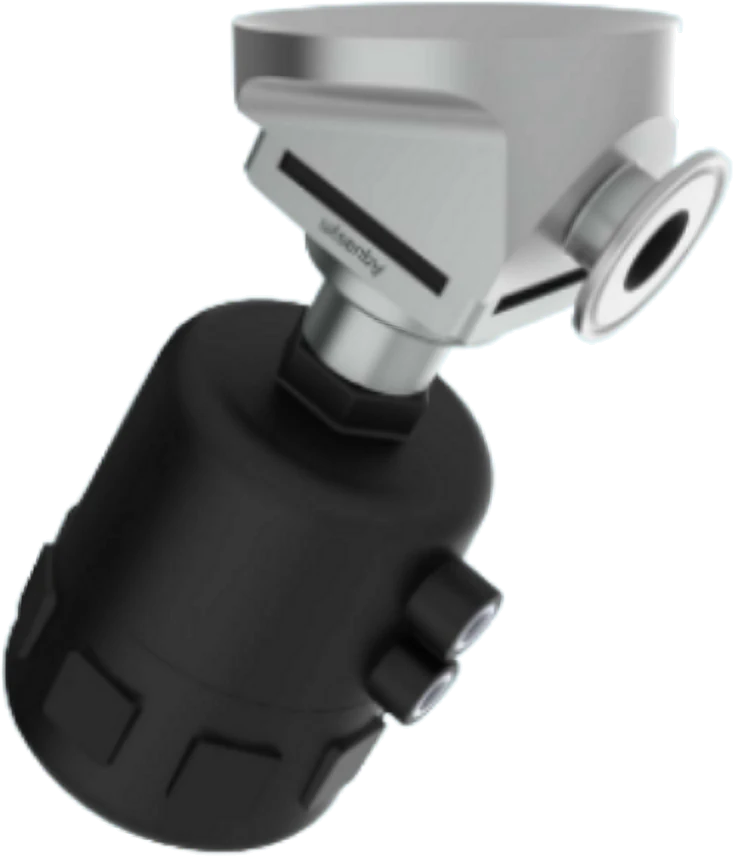
    Quotation and GA drawing

    Request a Tank Bottom Valve Quote

    Tell us the body style, size and vessel connection, or paste the spec from the builder. We reply with a quotation and a GA drawing for your valve.

    • Quotation and GA drawing for your valve
    • Welded flange or Tri-Tank, ¼ to 4 in.
    • Manual, Pneumatic or Electric actuation
    • Your spec from the builder carried into the request
    Thank you! Your submission has been received!
    Oops! Something went wrong while submitting the form.