Manual Actuation

Single-Use Manual Pinch Valve

Sterile flow control with no power and no air. Hand-operated pinch valve for single-use bioprocess tubing, ¼″ to 1″ OD.

Our manual pinch valves provide precise and reliable control of fluid flow in tubing, regardless of material composition. A unique central pinch point within an encapsulated valve body seat delivers closure reliability and consistent flow, even after multiple cycles. Manufactured from high-quality 316L stainless steel to meet rigorous industry standards for durability and hygiene, and available in multiple sizes to accommodate both silicone and braided tubing with outer diameters ranging from ¼ in. (6.4 mm) to 1 in. (25.4 mm). Part of our single-use pinch valve range.
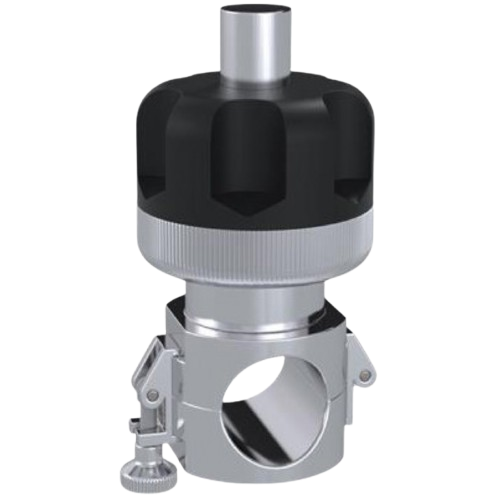
Single-use manual pinch valve with handwheel actuator for bioprocess tubing
Utilities RequiredNone
📏
Tubing OD Range¼″ – 1″
🔧
Pinch Head316L, Reusable
💧
Pressure RatingUp to 4 bar
Full Specification

Manual Pinch Valve Specifications

Complete mechanical and material data for the manual variant. Part of our single-use pinch valve range.

SpecificationDetail
OperationManual handwheel
Utilities requiredNone: no compressed air, no electrical supply
Tubing OD range¼ in. (6.4 mm) – 1 in. (25.4 mm)
Tubing compatibilitySilicone, TPE, braided, reinforced. No proprietary tubing
Material316L stainless steel, body and connections
Connection typeClamp-on, pinches directly on tube
InstallationTool-free
Pressure ratingUp to 4 bar
Process temperatureDetermined by the selected tubing material
Position indicationVisible open/closed indicator
DocumentationMaterial of Construction (MOC) certification available
Why Manual

Sterile shut-off with no infrastructure

The simplest way to add hygienic flow control to a single-use line. No power, no air, no controller.

No infrastructure

No compressed air, no 24 V supply, no control wiring. Works anywhere in the facility.

Fast to deploy

Clamp on, connect tubing, operate. Tool-free installation in seconds.

👤

Operator friendly

Hand-tightening is intuitive and the valve state is visible at a glance.

💰

Lowest cost per point

The most economical way to add a hygienic shut-off to a single-use flow path.

Reusable mechanism

The 316L pinch head is autoclavable and reused. Only the tubing is replaced.

No wetted parts

The mechanism never contacts product. Your tubing is the entire flow path.

Where the manual pinch valve is used

Process development & screening

Benchtop experiments where flow control is needed but no utilities are routed to the bench.

Mobile carts & portable rigs

Equipment that moves between rooms and cannot depend on a fixed air or power drop.

Manual sampling & diversion

Sample points and bypass lines operated deliberately by an operator rather than a sequence.

Isolation on automated skids

Backup and lockout points alongside motorized or pneumatic valves on the same skid.

Small-scale sterile transfer

Fill and transfer at lab volumes, feeding from single-use bags through pre-assembled flow paths.

Cell and gene therapy workflows

Closed, small-batch processing where every added utility is another qualification burden.

Choosing between actuation options

Choose pneumatic for high-cycle automated lines that already have plant air. Choose motorized where you need programmable positioning and feedback to a PLC. Full side-by-side comparison on the single-use pinch valve overview.

FAQ

Manual Pinch Valve FAQ

Does the manual pinch valve need compressed air or power?

No. It is operated entirely by hand and needs no utility connection.

What tubing does it fit?

Silicone, TPE, braided and reinforced tubing with ¼ in. to 1 in. outer diameter. No proprietary tubing is required.

Can I see whether the valve is open or closed?

Yes. A visible position indicator shows valve state without instrumentation.

Is the manual valve reusable?

The 316L stainless steel pinch head is reusable and autoclavable. Only the tubing is replaced between batches.

What pressure can it handle?

Up to 4 bar.

When should I choose pneumatic or motorized instead?

Choose pneumatic for high-cycle automated lines with plant air available. Choose motorized where you need programmable positioning and feedback to a PLC.

What temperature range can the valve handle?

The valve body itself is not the limiting factor. Operating temperature is set by the tubing you select, so confirm the rating of your chosen silicone, TPE or braided tubing against your process conditions.

How is the valve installed and serviced?

Installation is tool-free: clamp the body onto the tubing run and it is ready to operate. The 316L pinch head is reusable and autoclavable, so day-to-day service is limited to swapping the tubing between batches.

Is documentation available for qualification or validation?

Yes. A Material of Construction (MOC) certification is available to support incoming qualification and regulatory documentation packages.

Can I use it with gamma-irradiated single-use assemblies?

Yes. The valve pinches externally on the tubing, so it is compatible with gamma-sterilizable single-use tubing and assemblies without exposing the mechanism itself to the process fluid.

What is the largest and smallest tubing size supported?

The manual pinch valve accommodates tubing outer diameters from ¼ in. (6.4 mm) up to 1 in. (25.4 mm), covering silicone and braided tubing across that range.

Downloads & Documentation

Request the Manual Pinch Valve Datasheet

Tell us your tubing size and application, and we will send the manual pinch valve datasheet direct to your inbox.

Thank you! Your submission has been received!
Oops! Something went wrong while submitting the form.
How It Works

How a Manual Pinch Valve Works

A manual pinch valve controls flow by mechanically compressing single-use tubing from the outside until the tube walls meet and flow stops. Turning the handwheel drives a stem down onto the tubing, seated inside an encapsulated valve body that keeps the closing force centered and repeatable across thousands of cycles. Because the mechanism never contacts the process fluid, the manual pinch valve has no wetted parts, no seals to validate, and no cleaning cycle to qualify between batches — only the tubing itself needs to be replaced.

1

Mount

Clamp the manual pinch valve body directly onto the tubing run. Tool-free, no fittings or adapters required.

2

Close

Turn the handwheel. The stem compresses the tubing at a single central pinch point until flow fully stops.

3

Confirm

A visible position indicator shows open or closed state at a glance, with no instrumentation needed.

4

Reset & reuse

Release the handwheel to let the tubing recover, then swap tubing between batches. The 316L pinch head is autoclaved and reused.

Because closure force is applied externally, the same manual pinch valve mechanism performs consistently whether it is fitted with silicone, TPE, braided or reinforced tubing, which is why it remains the simplest way to add sterile, hand-operated flow control to a single-use bioprocess line. See full specifications or compare it to our pneumatic and motorized pinch valves.